
Condo Living Room Interior Design: Where to Invest for Long-Term Value
Key Takeaways:
Focus on creating a cohesive design that aligns with the rest of the home.
Avoid over-investing in decorative or trend-driven features that offer limited long-term value.
Prioritise functionality and everyday usability when making design decisions.
Choose materials that age well and require minimal maintenance over time.
Keep the design adaptable to support future resale appeal.
Plan the layout carefully to improve space, flow, and overall balance.
Maintain a restrained approach so the space remains relevant over time.
Introduction
Condominium living is closely tied to lifestyle, positioning, and long-term property value. Designing a living room within this context requires more than achieving a polished visual outcome. A well-considered condo living room interior design should support daily living while contributing meaningfully to the home’s overall value.
At the same time, translating this into actual design decisions is not always straightforward. Many condo owners find themselves weighing personal preferences against what will continue to appeal over time. Taking a thoughtful, balanced approach keeps the living room practical and relevant over time.
This article explores key design considerations for condo living rooms, focusing on both usability and long-term value.
Understanding What Drives Value in Condo Living
The living room often sets the tone for the entire home. It shapes first impressions and reflects the overall quality of the property. However, value is not created through overly decorative or trend-driven elements.
Instead, effective property value enhancement design focuses on:
Consistency with the rest of the home
Materials that maintain their appearance over time
Layouts that improve usability and flow
Design choices that remain adaptable for future occupants
Highly personalised features may feel distinctive, but they can reduce flexibility during resale. A more balanced and refined approach tends to support wider appeal.
Avoiding Over-Capitalisation in Condo Living Room Interior Design
In many renovation projects, there is a tendency to allocate excessive budget to visually prominent features. When it comes to modern condo interior styling, this often results in statement elements that do not contribute proportionately to property value.
A more measured approach includes:
Prioritising functional upgrades over purely visual additions
Avoiding overly specific design themes that may date quickly
Maintaining a neutral base that allows future adaptability
This ensures that the living room complements key value-driving areas, such as kitchens and bathrooms. Keeping the living room design restrained allows higher-impact areas to justify the bulk of the budget.
From a homeowner’s perspective, kitchens and bathrooms are often evaluated more closely during viewings. This is because they reflect functionality, maintenance, and long-term usability. When these areas are supported by a living room that feels cohesive and proportionate, the entire home presents as more thoughtfully planned.
The Thoughtful Selection of Condo Living Room Interior Design Materials
Material selection plays a central role in both durability and long-term perception. As condo spaces are used daily and exposed to regular wear, finishes that hold up well over time help maintain both appearance and functionality. Choosing timeless interior design materials supports consistency across the home and reduces the likelihood of premature renovation.
Common considerations include:
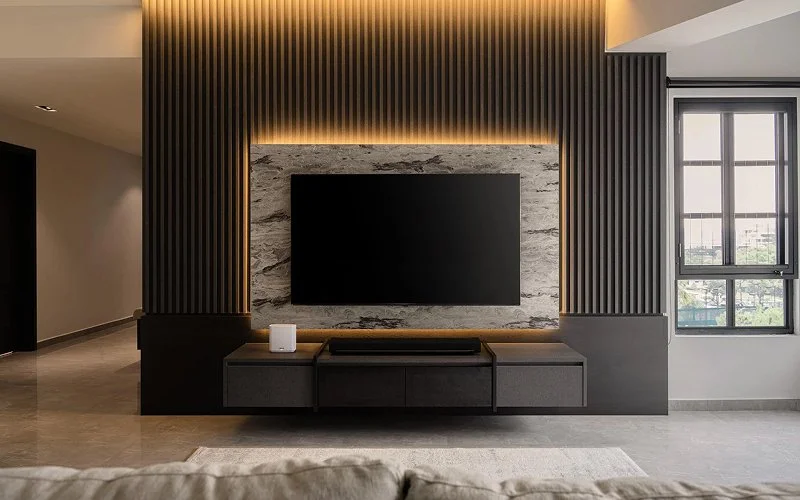
Natural finishes such as wood, stone, or textured laminates
Neutral tones that adapt easily to different styling preferences
Surfaces that can withstand regular use without visible wear
Taken together, these choices support a living room that remains visually consistent and easy to maintain in the long run. By prioritising materials that age well and adapt to changing preferences, the space stays relevant without requiring frequent updates or rework.
Designing the Living Room with “Quiet Luxury”
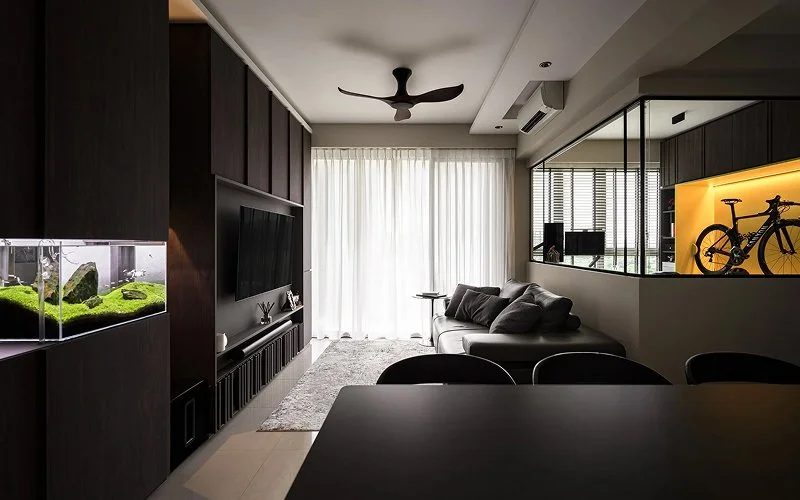
There has been a growing preference for understated luxury interior design in Singapore. Instead of relying on bold features, many homeowners are adopting a more restrained and cohesive design direction.
Key characteristics include:
Clean lines and controlled detailing
Balanced colour schemes that create visual calm
Lighting that supports both function and ambience
Minimal styling that avoids visual clutter
These elements collectively bring a sense of order and comfort to the living room, without relying on short-term trends or excessive styling. By focusing on restraint and clarity, the space remains adaptable as preferences evolve.
Maximising Space Through Layout and Planning
The size of condo living rooms in Singapore often calls for more efficient planning. The way a living room is planned can significantly influence both comfort and the overall sense of openness.
In many units, limitations such as compact floor areas, fixed layouts, or restricted natural light can make the space feel smaller than it actually is. More than just furniture placement, layout planning shapes how the space is experienced daily. For instance, it can influence how easily one moves through the room and how visually organised the space appears.
Applying effective strategies allows the room to feel well-proportioned:
Positioning furniture to improve movement and openness
Enhancing natural light through reflective surfaces and material choices
Incorporating multi-functional elements to support flexibility
Integrating storage solutions that reduce visual clutter
Turning Constraints into Design Opportunities
Structural limitations are common in resale condominiums. Irregular layouts, unused corners, and fixed architectural elements often shape how the living room can be used. Rather than treating these as setbacks, a more considered approach looks at how these constraints can be worked into the overall design.
A practical way forward is to reframe underutilised areas as functional zones. Corners can be adapted into seating areas or integrated storage, while existing architectural features can be enhanced through built-in elements that improve usability. Instead of concealing spatial irregularities, design can be used to define and organise them, allowing the space to feel more intentional and cohesive.
HOFT’s Case Reference: Evergreen Chic | Chiltern Park
An unconventional corner was reworked into a functional entrance zone, where built-in seating and storage improved both usability and flow. Lighting and material contrast were then used to define this area more clearly, while still maintaining cohesion with the rest of the home. Through this approach, what was once an overlooked space becomes a well-integrated part of the overall living environment.
Navigating Condo Renovation Considerations
Renovating a condominium involves more than design decisions alone. Compared to other property types, condo projects are shaped by additional layers of regulation and coordination. MCST guidelines, restricted working hours, and the need to minimise disruption to neighbours all influence how work can be carried out.
These constraints often translate into practical challenges:
Delays due to approval processes
Limited flexibility in scheduling
Increased complexity in project coordination
Without proper planning, these factors can affect both progress and overall execution. Engaging a reliable interior design company in Singapore ensures that requirements are addressed early, from submission processes to on-site coordination. Clear communication, realistic timelines, and familiarity with condo regulations help ensure a smoother renovation with fewer disruptions.
A Balanced Approach to Condo Living Room Interior Design
A well-executed interior design plan brings together visual clarity, everyday functionality, and long-term relevance. The emphasis is placed on how each element works within the broader context of the home.
This involves making deliberate choices that hold up over time. Timeless materials provide consistency, practical upgrades improve day-to-day usability, and a cohesive layout ensures that the living room integrates naturally with adjacent spaces. The ultimate goal is to support a unified and well-resolved interior.
Elevating Condo Living with HOFT
A successful condo living room interior design balances visual quality, functionality, and long-term relevance. It is shaped by thoughtful material selection, practical layout decisions, and a restrained design language that does not rely on short-term trends.
HOFT approaches each project with a focus on shaping spaces that reflect both the homeowner’s lifestyle and the long-term property value. Our process begins with understanding how the space is used, followed by careful planning of layout, materials, and functional details.
Understanding that every client is unique, we tailor our interior design services to suit individual needs and preferences. This means taking the time to listen, interpret, and translate your vision into a space that feels natural and aligned with your way of living.
Contact us to explore a more refined approach to luxury living room design.