
4 Room HDB Interior Design: Balancing Function, Cost and Design

Key Takeaways:
Prioritise essential works first, as infrastructure forms the foundation of long-term functionality.
Plan renovation costs clearly to avoid imbalance and unexpected overspending.
Focus on long-term value, not just upfront savings, when making design decisions.
Design spaces that support daily living, not just visual appeal.
Introduction
Designing a resale flat is not just about how it looks. Homeowners often face the challenge of balancing design choices with how the space performs over time. For a 4-room HDB interior design, each decision impacts both everyday usability and future maintenance.
This guide explores how to approach renovation with a clearer perspective, focusing on practical upgrades and renovation cost planning in Singapore. It also highlights how thoughtful design decisions can come together as a cohesive whole.
Why Many Renovations Feel Expensive but Incomplete
One of the most common frustrations among resale homeowners in Singapore is spending a significant amount on renovation, yet feeling like the outcome is incomplete. This often happens because essential works such as rewiring, plumbing, or floor levelling take up a large portion of the budget without offering visible results.
As a result, these necessary upgrades are sometimes reduced in favour of more visible elements like décor or loose furniture. While this may make the home appear finished initially, it often leads to recurring issues that affect home design for daily living.
A key mindset shift is to stop viewing these as “hidden costs” and instead recognise them as the foundation of good design planning. Without them, even the most visually appealing space will struggle to function properly over time.
Rethinking Cost: From Immediate Spending to Long-Term Value
A more effective interior design approach in Singapore is to evaluate decisions based on long-term performance. For instance, investing in higher-quality fittings, hinges, or laminates may slightly increase initial expenses, but it reduces maintenance issues and replacement costs later. This makes interior design cost optimisation practical rather than restrictive.
At the same time, not every part of the home requires the same level of investment. A balanced approach typically includes:
Prioritising core systems such as electrical and plumbing
Allocating sufficient budget for built-in carpentry
Phasing decorative elements over time
The key is to ensure spending is intentional and aligned with how the home will be used daily.
Planning Your Renovation Budget with Greater Clarity
Cost uncertainty often arises when renovation planning lacks visibility and structure. With multiple components involved, from infrastructure to finishes, homeowners may struggle to see how their budget is being distributed. This can result in imbalanced spending and decisions that do not fully support long-term functionality.
A clearer cost planning approach typically breaks expenses into three key categories:
Essential infrastructure: electrical works, plumbing, hacking, levelling
Built-in elements: wardrobes, kitchen cabinets, storage systems
Finishing details: lighting, materials, furnishings
By prioritising infrastructure first, homeowners create a stable base for the rest of the design. This also allows flexibility to adjust aesthetic choices later without compromising functionality.
4-Room HDB Interior Design That Works Beyond Visual Appeal
A well-executed 4-room HDB interior design extends beyond surface aesthetics to shape how a home is experienced daily. By aligning layout, materials, and lighting with real-life routines, the space becomes both refined and highly functional over time.
In practical terms, this means designing spaces that serve multiple functions:
A study that doubles as a guest area
A living space that accommodates both relaxation and hosting
Storage that blends seamlessly into the layout
Lighting, material choices, and layout planning all contribute to how comfortable and usable a space feels. Layered lighting, subtle contrasts, and controlled textures can create depth without overwhelming the home.
Working with Constraints Instead of Around Them
Resale flats often come with structural limitations, such as beams or pillars that cannot be altered. While these elements are commonly seen as restrictions, they can instead be approached as opportunities within the overall design. With careful planning, these features can be integrated in a way that enhances both functionality and visual cohesion.
Examples:
A beam can define zones between the living and dining areas
A pillar can be transformed into a feature or integrated storage
Built-ins can align with structural elements for a cohesive look
Creating Adaptable Spaces for Changing Needs
A key strength of a 4-room flat lies in its inherent flexibility. Instead of creating rooms with fixed purposes, a more thoughtful approach is to incorporate adaptable home design concepts that allow the home to evolve without requiring major renovations. This not only improves long-term usability but also supports better space efficiency within a typical HDB layout.
In practical planning, this means designing layouts that support multiple functions within the same space. For instance, a room that serves as a study today can be easily reconfigured into a nursery or guest room in the future. Meanwhile, a dining area can be designed to expand during gatherings yet remain compact and practical for daily use.
Storage solutions can also be designed with flexibility, allowing them to accommodate changing lifestyles without the need for frequent redesign. By prioritising adaptability from the outset, homeowners can create a space that remains functional across different life stages.
Balancing Function, Cost, and Design
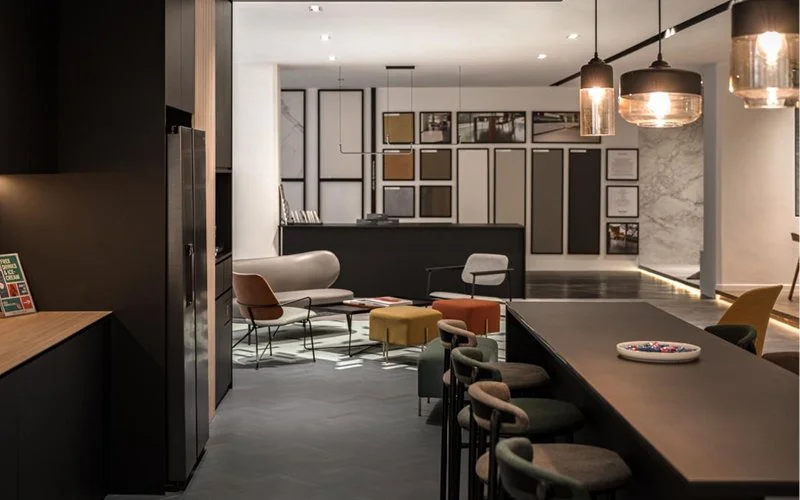
Ultimately, successful interior design for residential projects is about aligning function, cost, and design from the beginning. Strong infrastructure planning sets the foundation for reliable daily use. Clear cost allocation helps guide more intentional design decisions. Together, they shape a home that feels seamless and intuitive to live in.
Translating Thoughtful 4-Room HDB Interior Design into Everyday Living with HOFT
Singapore’s resale HDB flats present both challenges and opportunities. With the right approach, they can be transformed into spaces that feel personal, functional, and well-balanced.
HOFT approaches 4-room HDB interior design by focusing on how homeowners live, rather than applying fixed design formulas. Our process combines careful planning, material selection, and integration of existing structures to create homes that support everyday routines.
Through a personalised and collaborative approach, we deliver interior design services that balance design, cost, and long-term usability. This brings together visual consistency and long-term functionality in a way that supports everyday living.
Contact us to transform your space into a well-balanced home designed for lasting comfort and functionality.