
Guide to Wabi Sabi Interior Design: Ideas & Tips

Key Takeaways
Wabi Sabi is a Japanese philosophy celebrating imperfection, impermanence, and authenticity.
It emphasizes simplicity, aged materials, and natural textures.
Ideal for creating calm, authentic, and beautiful spaces in both residential HDB flats and boutique commercial projects in Singapore.
Encourages handmade, eco-conscious, and sustainable choices.
Promotes a home that tells your story, complete with its beautiful flaws.
What Is Wabi Sabi Interior Design?
Rooted in Japanese interior design, Wabi Sabi is more than just a trend, it’s a mindset that sees beauty in the old, the broken, and the imperfect. Instead of chasing pristine perfection, Wabi Sabi interior design celebrates wear, tear, and the natural cycle of life.
This design philosophy embraces the rustic charm of chipped pottery, the rough grain of unvarnished wood, and the weathered patina of aged metal. In a city like Singapore, where modern interiors often chase sleek uniformity, Wabi Sabi offers a breath of authenticity and calm. Whether you're revamping a compact HDB flat or styling a boutique commercial interior design project, Wabi Sabi interior design can bring a refreshing sense of groundedness. It is also a deeply personal style, focused on warmth, intention, and the meaningful imperfections that make a house feel like home.
Key Elements of Wabi Sabi Interior Design
At its core, wabi sabi interior design is about finding beauty in imperfection and creating spaces that feel calm, grounded, and lived-in. Rather than striving for symmetry or polish, it embraces natural materials, subtle irregularities, and a quiet sense of restraint. These elements come together to shape interiors that feel authentic and deeply personal:
• Natural, unrefined materials — Raw wood, stone, clay, and linen are chosen for their texture and ability to age gracefully over time.
• Appreciation of imperfection — Irregular shapes, uneven finishes, and visible wear are not concealed but valued as part of a piece’s character.
• Muted, earthy colour palettes — Soft neutrals, warm greys, and clay tones create a soothing backdrop that supports a calm atmosphere.
• Simplicity with intention — Spaces are kept uncluttered, with each item carefully selected for its purpose or meaning.
• Connection to nature — Light, air, and organic elements are integrated to create a sense of balance between the indoors and outdoors.
• Subtle layering of texture — Contrast is introduced through tactile surfaces rather than bold decoration, adding depth without visual noise.
• Focus on craftsmanship — Handmade or artisanal pieces are often favoured, highlighting the human touch behind each object.
• A sense of stillness and space — Negative space is embraced, allowing rooms to feel open, reflective, and unforced.
Flawed Beauty: Embracing Character Over Perfection
The heart of Wabi Sabi lies in accepting and highlighting imperfections. A crack in a ceramic bowl, scratches on a wooden dining table, or the slight asymmetry of hand-built furniture aren’t seen as flaws, they’re signs of life. These imperfections tell a story. They remind us that everything ages, changes, and wears with time, and that’s where the true beauty lies.
This makes Wabi Sabi interior design perfect for people who want their homes to feel real, lived-in, and full of personal charm. It complements both interior design residential and HDB interior design projects by creating spaces that are warm, relatable, and comforting. You’ll also notice a preference for balanced asymmetry—furnishings or décor arranged in a way that feels natural and unforced, echoing the randomness of nature.
Zen in Simplicity: Living With Intention
Inspired by minimalist design principles, Wabi Sabi encourages you to let go of clutter. Instead of filling your space with decorations and trendy pieces, the focus shifts to meaningful objects that bring you peace and joy. Every item in a Wabi Sabi room has a purpose—whether it’s a handcrafted bowl from a local market or a vintage lamp passed down through generations.
The use of soft, earthy tones, like muted greys, warm taupes, and gentle browns, enhances this sense of calm and balance. These colours mirror the organic world and support a peaceful, uncluttered mind.
Fabrics and accessories tend to be handmade or artisan-crafted, giving each room a distinctive personality. By living with less, your space becomes more reflective of your personality and more supportive of your mental wellbeing. Minimalism in Wabi Sabi is not sterile or strict—it’s gentle, forgiving, and effortlessly elegant.
Textures Matter: The Organic Touch
A key feature of Wabi Sabi interior design is the use of organic textures in design. Rather than glossy, factory-made surfaces, Wabi Sabi celebrates raw, natural materials that change over time. Think unfinished timber beams, woven fabrics, natural stone countertops, or exposed brick walls.
Incorporating tactile elements such as linen throws, clay ceramics, and raw-edged wooden furniture makes each space feel uniquely warm and inviting. This is especially valuable in HDB settings, where a neutral foundation can be easily layered with textured, soulful accents.
These tactile surfaces create visual interest while grounding the room with earthy, authentic elements. Whether you’re designing a tranquil bedroom, a meditative study, or a cosy living space, these textures bring depth and soul.

For those working with commercial interior design Singapore projects, incorporating organic materials also adds a touch of eco-consciousness and uniqueness—something increasingly valued in today’s design world.
The Art of Patina: Age Is an Asset
In Wabi Sabi, the passage of time enhances value rather than diminishes it. A cracked leather armchair, an old wooden stool with faded paint, or metal hardware rusted at the edges, all these things are welcomed and even treasured.
Patina is the visible history of an object. It signals years of use, love, and human connection. Rather than replacing worn furniture, Wabi Sabi encourages restoration, reuse, and respect for the past. This idea resonates especially well in HDB interior design, where family heirlooms and traditional materials can be thoughtfully incorporated into modern spaces.
Vintage or second-hand finds, such as old chests, benches, or even salvaged floorboards, play a central role. By mixing the old with the new, you create depth, narrative, and timeless charm.
Wabi Sabi and the Connection to Nature
Wabi Sabi interior design isn’t just about the beauty of imperfection—it’s also about fostering a deeper connection to nature. In 2025, more people are choosing to bring the outdoors in, and Wabi Sabi perfectly supports this trend. Incorporating plants, natural light, and outdoor elements into your home creates an organic flow between the natural world and your living space.
Whether it’s a small bonsai tree in the corner or a driftwood sculpture on a shelf, these elements add life and a sense of serenity, enhancing the Wabi Sabi ethos of harmony with the world around us.
Design elements such as pebbled pathways, wooden trays with dried botanicals, and large open windows further reinforce this connection. A sense of ‘bringing the outside in’ is essential to Wabi Sabi living.
Wabi Sabi Interior Design Ideas for Different Rooms
Applying wabi sabi interior design across the home is less about uniformity and more about adapting its philosophy to each space. Every room carries its own rhythm, shaped by how it is used and experienced throughout the day. By focusing on natural materials, quiet restraint, and a sense of lived-in comfort, wabi sabi can be interpreted in ways that feel cohesive yet distinct from one room to another, allowing the home to unfold with subtle variation and depth.
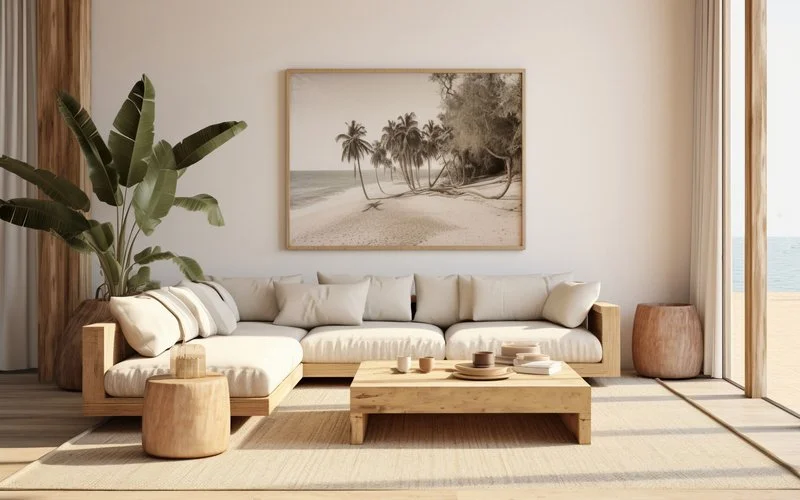
Wabi Sabi Living Room Styling Ideas
A Wabi Sabi living room benefits from a minimalist foundation that allows texture and form to take the lead. Low-profile seating, neutral upholstery, and open layouts create breathing space, while natural materials such as timber, linen, and stone introduce warmth. Within Wabi Sabi interior design, the living room should feel relaxed and unforced, with a few well-chosen pieces rather than decorative excess.
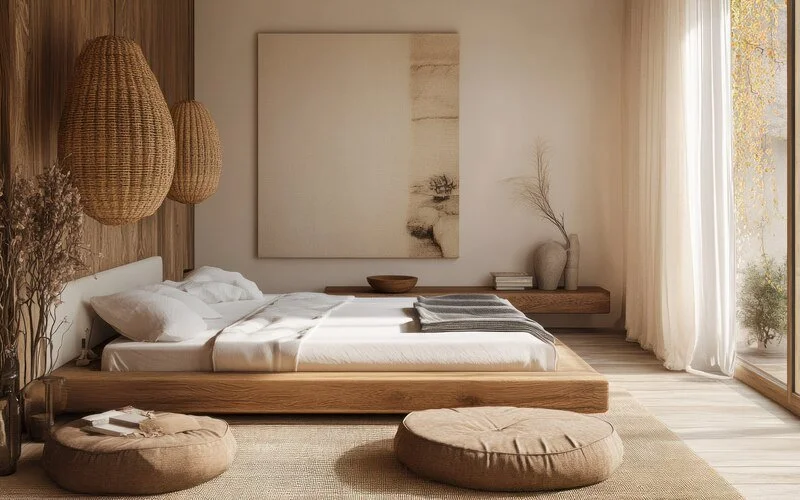
Wabi Sabi Bedroom Styling Ideas
Minimalist styling in the bedroom encourages rest and visual calm. Simple bed frames, muted tones, and uncluttered surfaces support the principles of Wabi Sabi interior design, where comfort and imperfection coexist. Natural fabrics, soft lighting, and subtle variations in texture help the space feel grounded and restorative without feeling sparse.
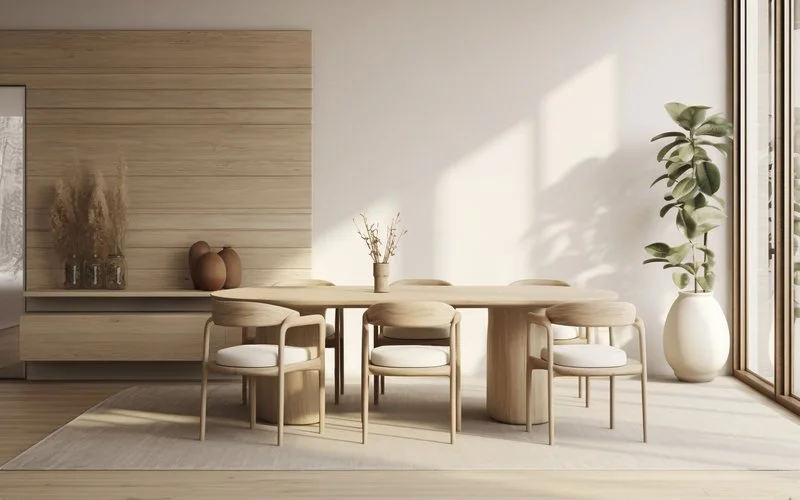
Wabi Sabi Dining Area Styling Ideas
In dining areas, minimalist layouts allow craftsmanship and material quality to stand out. A solid wood dining table, pared-back seating, and understated lighting work well within Wabi Sabi interior design, creating a setting that feels warm and communal. The focus remains on the dining experience itself rather than decorative layering.
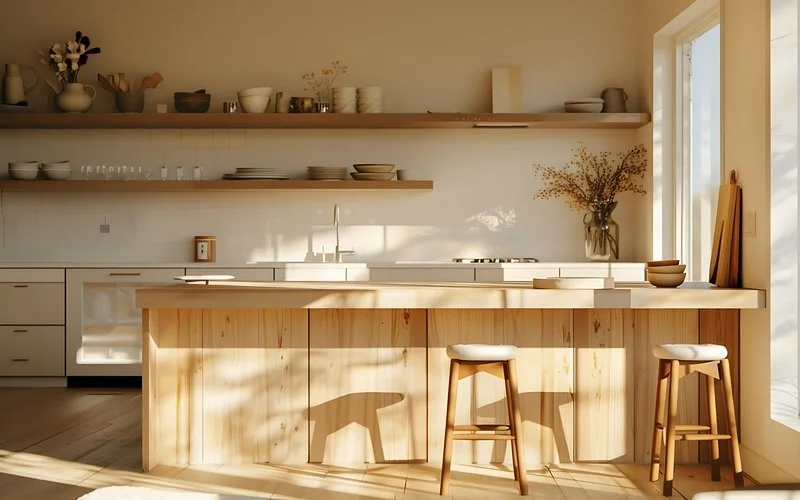
Wabi Sabi Kitchen Styling Ideas
A minimalist kitchen aligned with Wabi Sabi principles favours simplicity in both form and function. Clean cabinetry, natural finishes, and open shelving reduce visual clutter while highlighting everyday objects. Subtle wear, tactile surfaces, and restrained colour palettes help the kitchen feel authentic and quietly lived-in.
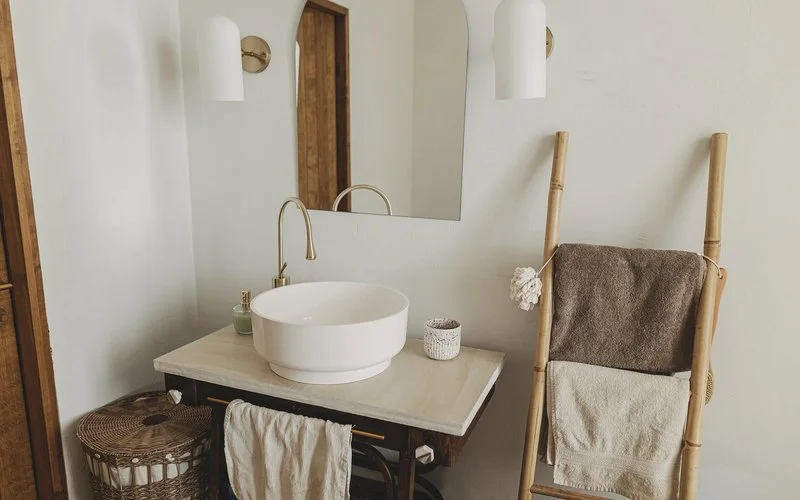
Wabi Sabi Bathroom Styling Ideas
Bathrooms styled with minimalist principles often feel serene and spa-like. Within Wabi Sabi interior design, this translates to raw textures, soft lighting, and uncomplicated layouts. Materials such as stone, concrete, and timber age naturally over time, reinforcing a sense of calm while keeping the space practical and uncluttered.
Wabi Sabi vs Japandi and Minimalist Interior Design
While wabi sabi interior design shares common ground with Japandi and minimalist styles, each approach carries its own perspective on simplicity, materials, and how a space should feel. Understanding these differences helps shape interiors that align more closely with your lifestyle and design intent.
Wabi Sabi vs Japandi Interior Design
Japandi blends Japanese and Scandinavian influences, combining clean lines with warmth and functionality. In contrast, wabi sabi interior design leans further into imperfection and raw authenticity. Japandi spaces often feel more structured and refined, with balanced compositions and controlled palettes, while wabi sabi embraces irregularity, ageing materials, and a softer, more organic expression. The result is a space that feels less curated and more naturally evolved over time.
Wabi Sabi vs Minimalist Interior Design
Minimalist interiors prioritise clarity, order, and reduction, often favouring smooth surfaces and precise forms. Wabi sabi interior design, while similarly restrained, introduces a deeper sense of texture and emotional nuance. Instead of striving for visual perfection, it allows wear, variation, and subtle imperfections to remain visible. Where minimalism can feel crisp and controlled, wabi sabi tends to feel warmer, quieter, and more reflective, shaped by the passage of time rather than strict design rules.
Design That Feels Like Home
Wabi Sabi invites us to slow down and appreciate the imperfect, the impermanent, and the incomplete. In a world full of filtered images and fast-paced trends, it provides an honest and grounding alternative. With its focus on natural beauty, personal meaning, and quiet comfort, Wabi Sabi interior design can turn your space into a true sanctuary.
Whether you're refreshing your flat or planning a full renovation, Hoft Collective is here to help you bring the warmth and wisdom of Wabi Sabi into your home. Ready to embrace a beautifully imperfect style? Explore our interior design services at Hoft Collective.
Frequently Asked Questions
-
Colour palettes in Wabi Sabi interior design are typically muted and earthy. Soft neutrals, warm greys, clay tones, and gentle off-whites form a calm base that allows materials to stand out. Accents are minimal and usually drawn from nature rather than bold contrast.
-
Natural materials play a central role, including raw wood, stone, linen, clay, and plaster. These materials are valued for their texture and ability to age gracefully over time. Visible grain, subtle cracks, and irregular finishes are considered part of their character rather than flaws.
-
Yes, it adapts well to modern homes when applied thoughtfully. Clean layouts, good natural light, and restrained furnishings provide a suitable foundation, even in contemporary apartments. Textural finishes and handcrafted elements add depth without overwhelming the space.
-
Decorating with Wabi Sabi interior design focuses on intention rather than abundance. Fewer pieces are used, but each item is chosen for its material quality, form, or personal meaning. Handmade objects, natural finishes, and negative space help the home feel calm and balanced.