
Insights for First-Timers: Why BTO 5 Room Design Should Be Based on Lifestyle, Not Layout
Key Takeaways:
When planning a BTO 5-room design, lifestyle should guide design decisions.
Generic BTO layouts often create underused or inefficient spaces without proper planning.
Flexible, multi-purpose design improves usability and supports daily routines.
Addressing practical constraints such as storage and movement enhances overall comfort.
A structured budget and thoughtful space planning lead to better long-term outcomes.
Introduction
A 5-room BTO flat offers more space than most HDB units, yet space alone does not guarantee comfort or functionality. Many first-time homeowners in Singapore quickly realise that translating a standard layout into a liveable home requires more than following the floor plan. The real challenge is to shape a space that supports daily routines while reflecting personal preferences.
In practice, a well-considered BTO 5-room design depends less on the original layout and more on how the space is used over time. Homes that prioritise lifestyle tend to feel more cohesive, efficient, and adaptable, especially as household needs evolve.
This article shares why a lifestyle-first approach leads to more practical and liveable BTO units than relying on layout alone.
Why Layout-First Thinking Often Falls Short
Standard BTO layouts are designed for general use. They provide a structural starting point, but they do not account for individual habits, routines, or priorities. When design decisions follow the layout too closely, the result often feels complete visually but disconnected functionally.
Oversized living areas, underused dining zones, or poorly defined transitions between spaces are common outcomes. These issues do not stem from a lack of space, but from a lack of alignment between layout and lifestyle. A floor plan defines boundaries, but it does not determine how a home should function. Interior design practices in Singapore have evolved significantly, moving towards lifestyle-driven planning rather than fixed layouts.
The “Cookie-Cutter” Effect in BTO Living
Many homeowners notice similarities between their unit and neighbouring flats. This sense of uniformity can make the space feel generic, even after renovation. The issue extends beyond aesthetics and affects how connected individuals feel to their home.
Shifting away from this requires a different starting point. Instead of working from the layout alone, homeowners benefit from assessing how they live day to day. Activities such as working from home, hosting guests, or resting should guide zone planning.
Designing Around Lifestyle, Not Assumptions
Every household uses space differently. A design that works well for one family may not suit another, even within the same flat type. Flexible planning creates opportunities for spaces to serve multiple functions without compromising comfort.
Rooms can be adapted into hybrid zones, such as study areas that double as workspaces. Open layouts improve movement and allow natural light to travel more freely across the home. Partition strategies introduce privacy where needed without closing off the space entirely.
HOFT’s Case Reference: Conjugal Living | Tampines Greenverge
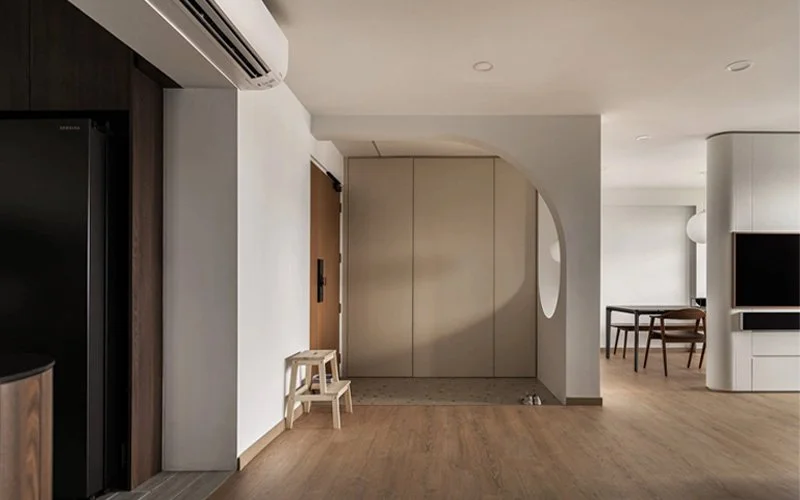
In this project, an inefficient living area was reconfigured into two distinct zones using a curved partition. A partially open study with glass panels supports work-from-home needs while maintaining visual continuity. The kitchen was redesigned into an open concept, with a concealed guest lavatory integrated into the layout. These adjustments reflect how thoughtful residential interior design can reshape a standard BTO into a more functional environment.
BTO 5-Room Design: Addressing Real Friction Points in Daily Living
BTO flats often present practical constraints that affect everyday usability, such as narrow walkways, tight service areas, and limited built-in storage. These issues can disrupt movement and reduce overall comfort.
Design should address these friction points directly. Storage works better when sized to actual household needs, while joinery can be adjusted to improve reach and ease of use. Layered lighting supports different activities and helps the space function more smoothly throughout the day.
The Budget Reality for First-Time Homeowners
Budget uncertainty is one of the most common concerns among BTO homeowners. Renovation costs can vary significantly, especially when decisions are made without a clear structure.
A more practical approach involves separating essential elements from flexible ones. Core components such as electrical work, carpentry, and layout adjustments should be prioritised. Decorative elements and loose furniture can be introduced progressively.
Material selection also plays a role. Finishes can achieve the desired aesthetic without unnecessary cost when chosen carefully. A structured budget reduces uncertainty and supports better long-term outcomes.
Solving the “Dead Space” Problem
Even in larger units, inefficient planning can result in unused or visually heavy areas. These spaces often emerge when design decisions are not aligned with actual usage patterns. Built-in cabinetry can be integrated into walls to maintain a clean visual flow. Floating furniture creates a sense of openness while improving circulation. Reflective materials enhance natural light and reduce visual density.
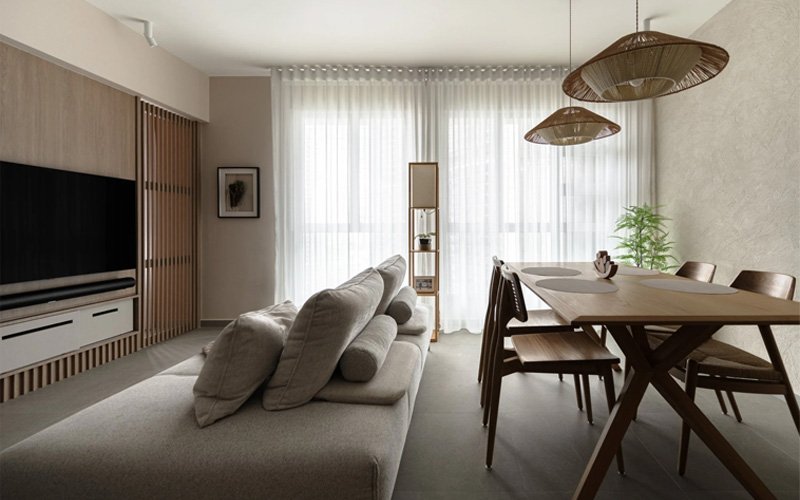
HOFT’s Case Reference: Vanilla Muji | Clementi Crest
A study area was designed with a bi-fold wooden door, allowing it to shift between open and private use. Fluted panels conceal storage while maintaining a clean aesthetic. A foyer bench doubles as seating and connects seamlessly with the dining space. These details demonstrate how thoughtful planning transforms standard layouts into purposeful environments.
Why Storage and Space Planning Matter Long-Term
Storage plays a part in maintaining a functional home. Without proper integration, clutter builds up over time and reduces both usability and comfort.
Concealed storage within walls and built-in units supports a cleaner visual environment. Multi-functional furniture introduces additional storage without occupying extra space. Underutilised areas such as seating bases and bed platforms can be adapted for hidden compartments.
A well-planned home remains organised over time. This supports both daily convenience and long-term liveability.
A More Considered Approach to BTO 5-Room Design
For first-time homeowners, the shift from layout-first thinking to lifestyle-driven design makes a measurable difference. Homes that reflect real usage patterns tend to feel more comfortable, efficient, and adaptable over time.
A successful BTO 5-room design balances practicality, identity, and adaptability. Designing around daily habits creates a more intuitive flow within the home. Each space should serve a defined purpose while remaining flexible enough to accommodate future changes.
Founded in 2019, HOFT specialises in interior design services, focusing on aesthetics while balancing functionality. Through careful planning, material selection, and spatial refinement, we create homes that move beyond standard layouts and support everyday living with clarity and purpose.
Contact us to design a BTO unit that reflects your lifestyle.